Could Nigeria Have a JFK Moment in 2027?
Nigerians are not politically apathetic. Millions campaign, volunteer, argue, organize, and vote every election cycle. What we have yet to see is a movement capable of turning that political energy into a shared national purpose...
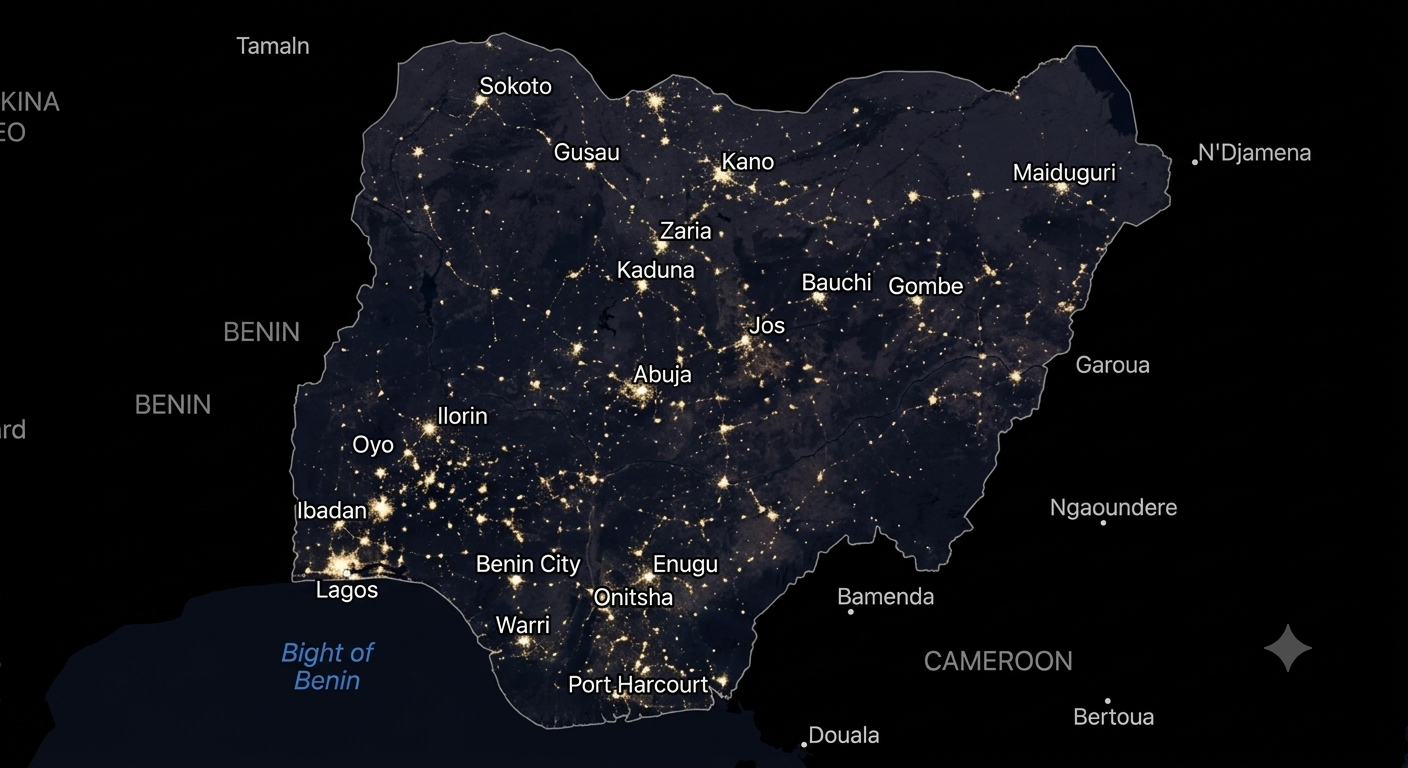
Nigeria is living through two competing realities: citizens who see the nation bogged down with fruits of corruption and insecurity, while the status quo insists the nation is growing and expanding economically.
Have you not seen the growing GDP?
What’s hard to see is what we urgently need, while we still have a democratic system in place: a JFK moment.
The decade leading up to John F. Kennedy’s election is often remembered as the golden age of postwar America.
With the Great Depression behind it and victory in World War II secured, America entered the height of its post-war boom. It was simultaneously prosperous, complacent, distrustful, divided, and restless. Rising incomes, suburban expansion, consumer goods, interstate highways, and new infrastructure fueled a level of post-war confidence that was hard to match.
It’s easy to see why the political establishment prized stability: don’t rock the boat. So, conformity was king.
But stability is rarely experienced equally.
For many Americans, the postwar consensus represented security. For others, it seemed like a cage.
Black Americans in the south were marginalized and had roadblocks that limited their voting rights. Women post-war were now relegated to the domestic front. And the youth who inherited said “stability“ now had the luxury to look beyond survival, just living. They wanted movement, progress, participation, the status quo wasn’t enough, rightfully so.
The invisible grip organized crime held over politics, business, and public institutions had become so entrenched that many Americans questioned where legitimate authority ended and criminal influence began.
Organized crime then wasn’t simply a crime problem. It was an institutional legitimacy issue.
Mobsters had become intertwined with legitimate institutions, both public and private; judges, city officials, politicians, union leaders and even law enforcement, in a bid to protect their own interest.
They became barriers between citizens and their leaders, edging out organic democratic participation.
So the sentiment went from “will they get him”, to “who can stop them”.
By 1960, the status quo was ripe for a new frontier. Kennedy didn’t simply give voice to that desire; he embodied it. Rather than relying solely on the political establishment that had elevated him, he built a campaign around a different question: Who had political energy that had yet to be fully activated?
His answer reached beyond the traditional machinery of politics to young people, women volunteers, Black voters, Catholics, suburban communities, and television audiences.
And when they looked to see who was inviting them to explore new horizons, Americans saw a candidate who appeared to embody the country’s highest aspirations.
A man asking to break down outdated barriers by taking charge.
For a country that never had a catholic leader for fears he’d be led by the pope, he was catholic.
Born into the status quo, he challenged without denouncing it.
And at a time when courting the black vote meant losing a good chunk of the votes from the south, he did, and gained on both grounds.
He did all this, keeping the message in focus: We are a nation who should be better. Not a race, not a religion, a nation.
His critics tried to reduce him to a curated figure, an act to get elected.
Maybe.
But he cared enough for the act to sell it perfectly, and the result?
A presidency that felt accessible enough for citizens to imagine themselves as participants rather than spectators.
A campaign model that lit a democratic fuse whose effects still shape American politics today.
This is the Kennedy moment I believe Nigeria lacks today.
Not Kennedy the man, but Kennedy the campaign, the movement.
Nigerians are not politically apathetic. Millions campaign, volunteer, argue, organize, and vote every election cycle. What we have yet to see is a movement capable of turning that political energy into a shared national purpose rather than another contest between ethnic, religious, and partisan loyalties.
We have drifted into what I would call a shadow democracy. We primarily experience the state as more an administrative authority, and less a political community.
For many Nigerians, government interaction is mostly limited to registration and licensing offices: driver’s licenses, business registration, land registries, and other administrative services. So the average citizen mostly gains access when the government needs something from them, almost never when the citizen needs anything from the government.
Our public institutions, national interests and politicians seem to be permanently hijacked by shadow entities.
We have no say in our external politics how much less internal ones like party primaries.
The result?
Politicians much more loyal to their political operators than to the people in whose name they have the honor to lead.
The status quo insists we’re on track for economic boom while the nation all around seems to be on fire; kids kidnapped from schools, villages sacked by armed bandits that ends in indigenes being killed or displaced from their lands, unemployment, inflations and rising homelessness.
The schism is unreal.
We pose as a nation, a republic, yet govern each other as warring tribes eager to assert dominance.
We first look at fellow Nigerians through the lens of tribes and religion, our differences, and neglect the one thing we all share in common, our nation.
I’ve seen military men rule over us like subjects in their military uniform, and politicians look more like the ruling tribal chiefs than executive leaders.
I’ve seen Fulani leaders, Yoruba leaders, Igbo leaders, Ijaw leaders, in and out of office, with no national progress.
I’m yet to see a Nigerian president who presents as a national leader instead of a tribal or religious one.
And as I wait to see one, I ask, can we last one more cycle of clashing realities between the elected figures and the masses?
Because what I find most disturbing is this: the further we sink into our mentality of warring tribes and religion, the worse our choices become.
We find ourselves with leaders who have little to no interest in the nation.
Leaders whose kids barely live in the country, how much less school here.
Whose doctors are abroad.
Who have more investments, including homes, abroad than at home.
Who have more foreign currency to their names, than they do Naira.
What incentive does such a person have to make the country better?
When the white man did it, we called it colonialism.
So what do we call being occupied from within?
With the 2027 elections only months away, I am looking at those running with one measurement in mind.
A national leader.
To borrow somewhat from JFK:
A national leader who believes in Nigeria.
Who is neither Christian nor Muslim, northern nor southern.
One who sees religious liberty as so individualistic that an act against any is an act against all.
Who believes that religious intolerance will someday end, and leads the way to that end.
If all you share in common with your secular national leader, especially, is religion or ethnicity, you have a tribal ruler or religious ruler, certainly not an executive leader.
We’ll either move ahead as a nation or keep disintegrating in tribal and religious conflicts dragging us all down.