Lights Out on the City on the Hill
If the city on the hill elects to turn its lights off, what hope do we have in a land where the electricity was never stable to begin with?
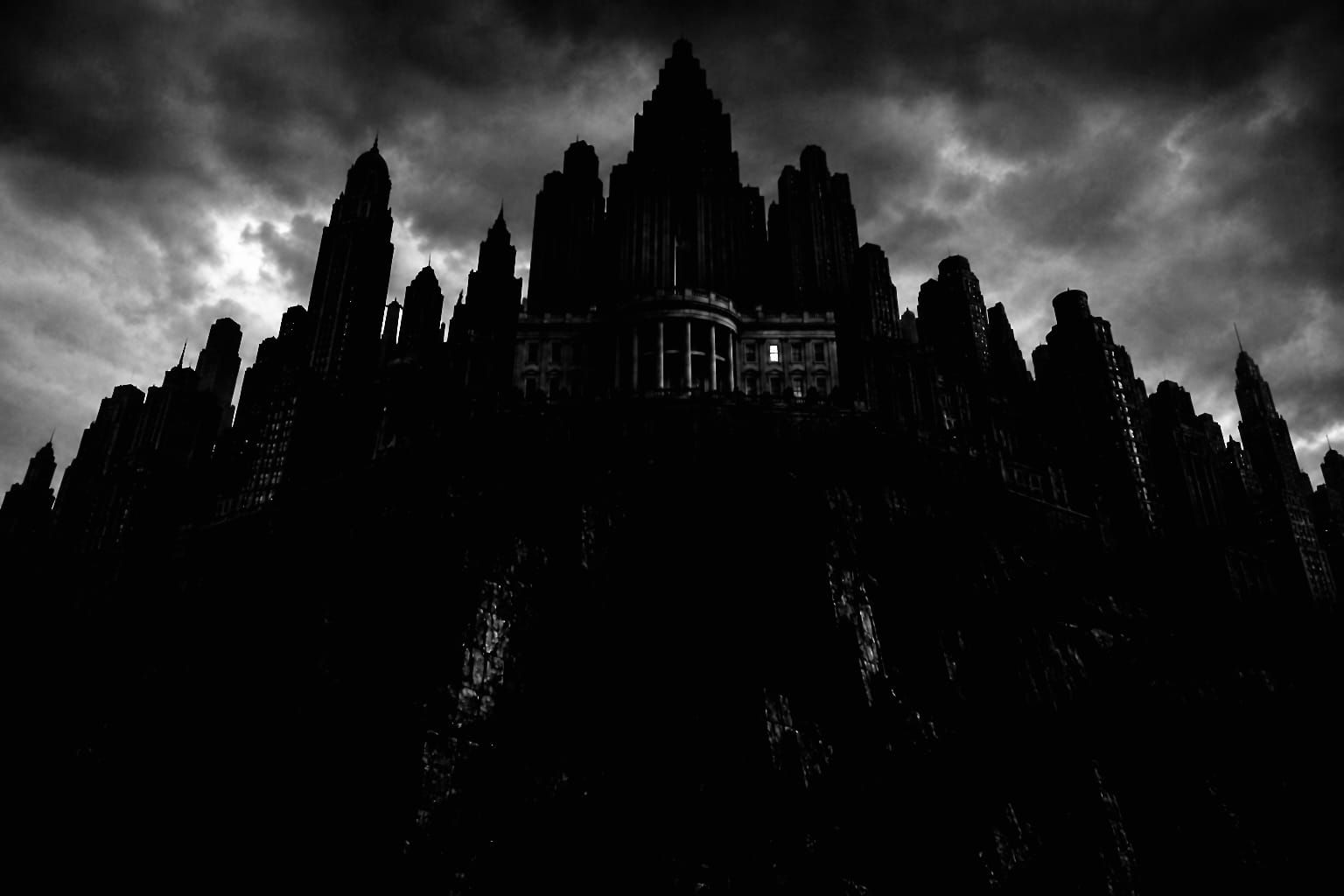
It was the year 2026 in the greatest empire the world had ever known.
A nation that, for generations, presented itself not merely as powerful, but as principled. A shining city on a hill where freedom and human dignity supposedly guided the order of the day. Its greatest export was never steel, oil, or machinery, but a belief: that the individual should be free to create, yet protected by laws that respected no one man above another. This promise was safeguarded by institutions built to restrain the corruption of power, ensuring that even the highest office in the land remained beneath the law that created it: the Constitution.
It was the heir of democracy.
A system where the people were meant to choose their leaders free from the weight of kings, oligarchs, dynasties, and biased courts. Corruption, at least in theory, was to find no comfortable home there. The law was to stand above personality, and dissent itself was woven into the very fabric of patriotism.
And for a long time, the world believed it.
The shining city influenced entire generations through carefully crafted images flickering across cinematic screens and television sets. It sold not just prosperity, but aspiration: freedom of thought, of speech, of expression. These were never presented as privileges handed down by rulers, but as the natural fruits of human dignity itself.
Time and time again, I looked toward the empire as a blueprint for liberty. Not because it was perfect, but because it seemed uniquely committed to correcting itself. That was the miracle of it all. Power appeared to be restrained by friction. Leaders came and went, but the system held.
How could it not inspire imitation?
The empire generated wealth at unimaginable scales. It forged industries, drove scientific advancement, and transformed innovation into a national identity. To participate in creation itself became a patriotic act. It was not merely a country; it was the ultimate human dream in living colour.
Then the century turned, and the sky fell.
The shining city was attacked, and something deep within its spirit broke. Smoke filled the air, followed closely by grief, panic, vengeance, and fear. The empire did what wounded empires always do: it marched outward in the name of security. Wars multiplied across distant lands. Hundreds of thousands died. New laws emerged at home, and freedoms once considered sacred became negotiable beneath the suffocating weight of terror and survival.
A quarter-century later...
Slowly, almost imperceptibly, the city on the hill began dimming its own lights.
There was no dramatic collapse. No tanks in the streets. No final declaration announcing the death of the old order. Just the slow, mundane flicking of switches in broad daylight. Each administration arrived promising restoration and departed having normalized a little more darkness than it inherited.
The empire, once celebrated for creation, quietly pivoted toward destruction.
A civilization that had once defined itself through industry, imagination, and innovation increasingly organized itself around conflict, surveillance, blind loyalty, and the endless machinery of war. The language of freedom remained untouched, even as its meaning grew thinner with each passing year.
By 2026, I found myself squinting toward the empire from afar, searching not for brilliance, but for signs that at least one light still remained on.
The final light…
The city on the hill, once the global hub of creativity, had become a shadow of its former self. Yet, I kept watching, because I desperately needed to believe that the system still worked somewhere. And where better than in the land of the free?
Instead, I watched as the citizens, long fed on a diet of exceptionalism, witnessed the dismantling of their system in utter disbelief. The highest office in the land had morphed into a shield for wrongdoing, and corruption had lost its shock value until it was nothing more than the background noise of daily living. Some treated the collapse of their Republic as mere evening entertainment, while others marched loudly in opposition.
But ordinary people appeared less and less capable of meaningfully resisting power, even at its lowest levels. Institutions once trusted to withstand the gravitational pull of personality, money, and political loyalty increasingly seemed unable, or unwilling, to do so.
Democracy itself began to feel less like a system of laws and more like courtiers in a king’s court, performing the empty rituals of a dead constitutional order.
But perhaps most troubling of all, dissent, the very thing once encouraged to keep power in check, increasingly came to be viewed as betrayal to be excised.
Beneath the spectacle, something deeper was eroding.
A society that once imagined itself reaching endlessly toward progress no longer debated grand visions of the future. The highest political aspiration of the common voter had narrowed into something far more primitive: stop the wars, stop the killing, stop the bleeding. Yet no matter how many times they cast their votes for change, buying into the promises of lone dissenting politicians, they found themselves living with the exact same policy of endless conflict, exporting death and destruction abroad while their own inner cities crumbled at home.
The empire no longer asked what kind of future it wished to build. It now merely prayed to survive the one it had created.
It is still 2026, and I find myself watching from across the Atlantic toward that once-shining city on a hill with a question I cannot escape:
If the city on the hill elects to turn its lights off, what hope do we have in a land where the electricity was never stable to begin with?