Is Obasanjo's 'Afro-Democracy' an Oligarchy Disguised as Tradition?
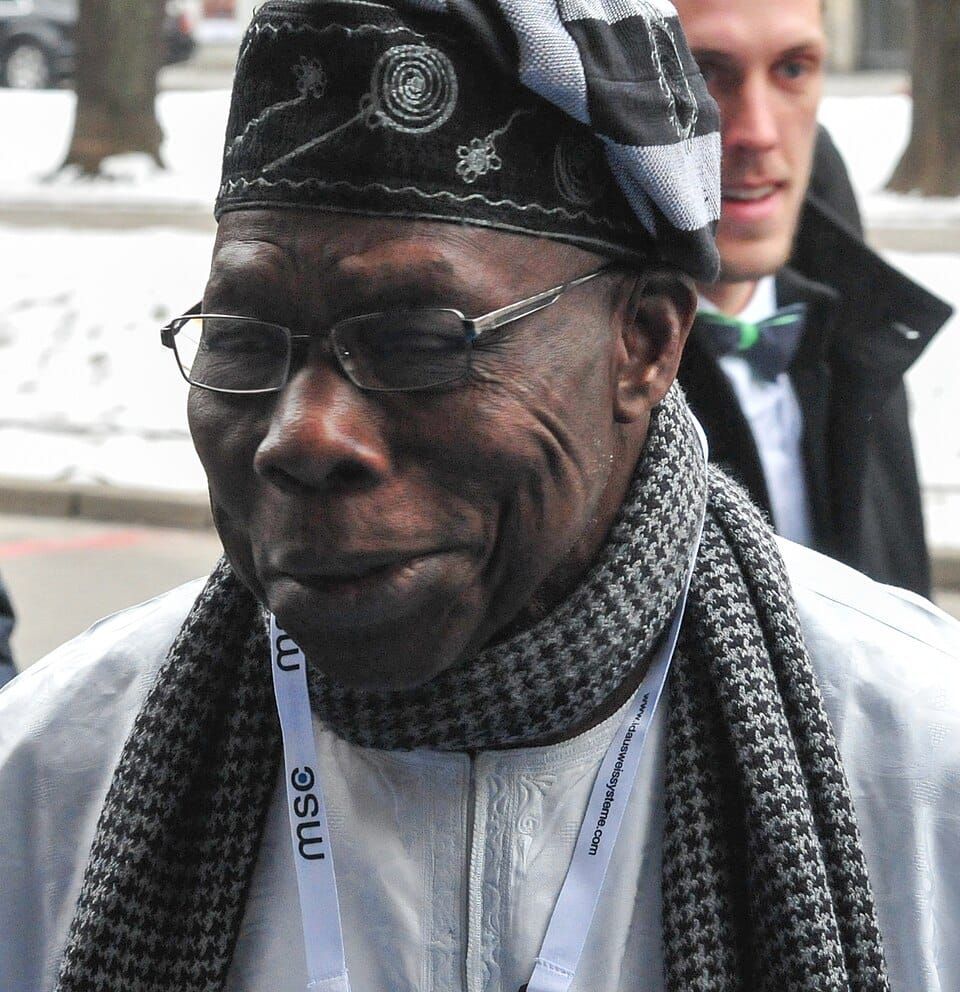
Former President Olusegun Obasanjo wants us to overhaul our ill-informed but still functioning young democracy for what he labels "Afro-Democracy". He insists that without this shift, Africa will never achieve effective leadership, citing a lack of traditional connection to the democratic process as a permanent constraint.
In his now-viral interview with News Central, he touched on a range of issues, all pointing to what he frames as an almost inevitable national decline, unless leadership is fundamentally restructured... by his standards. He painted a bleak picture: national refineries that may never function, a fading global presence, rising insecurity, and entrenched corruption. In his view, the problem is singular: leadership. And so is the solution.
But the interview reveals something else: he is the tailor trying to hide the fact that he took the wrong measurements for this country back in 1979 when he signed our current constitutional framework into law under military rule. Even after a second chance as an elected leader for two terms, he failed to fix those measurements, leaving us with a constitution that concentrates power at the federal level, with minimal autonomy at the state and local levels... the very structure that has stifled meaningful democracy.
The Missing Headline
While his comments on refineries made waves, the most disturbing take remains largely absent from the headlines. When asked if President Tinubu was creating a "one-party" model, Obasanjo’s reply veered from statesmanship into worrisome ambiguity.
After claiming to take the President at his word, he moved swiftly to his proposal for a new system:
“It’s not working even for those whom we inherited it from. They are questioning it... why should we want to continue to hang on to it?”
The journalist missed the opportunity to demand a blueprint. There was no follow-up, just a chorus of "Daddy" and praise.
So, I did some research.
The Vision Of Afro-Democracy
Obasanjo's Afro-Democracy" is a system where decisions are made through “shuttle diplomacy” and dialogue between interest groups: traditional rulers, elders, professional bodies. It is a move away from winner-takes-all elections toward a process of elite consensus.
His proposal is not just for Nigeria, but Africa at large.
He argues democracy was “forced” on Africa and is unsuitable because it ignores traditional values and rulership structures.
[No one tell him we've abolished the killing of twins, women now lead institutions, and the world has moved on.]
He presents Afro-democracy as the “authentic African” system that incorporates our traditional governing structures to prioritizes the welfare of the majority. His stated goal is to end the era of small group capturing power and wealth.
In November of 2023, he called on African nations to systems they did not help design and adopt his proposal.
The Historical Irony
A brief look back raises a nagging question: didn’t Obasanjo go to war to protect this very centralized system?
The Civil War was fought to resist decentralized power and preserve a “One Nigeria” with a strong center. Today, he suggests that this winner-takes-all system was a "Western mistake."
But it is not the unitary system we practice today, the one that almost nullifies democracy by design, that he is truly calling into question; it is the process of leadership selection.
In his model, the power shifts from citizens electing leaders to an “elite committee” of elders, traditional rulers, and scholars. This would take the last illusion of power from the citizens who, thanks to the constitution he pioneered, already have almost none.
The Tribal Trap
His call for an overhaul rests on his claim that majority rule inevitably means the largest tribe wins.
A troubling perspective that signals a lack of faith in building a national identity beyond tribal alignment and toward shared social or economic priorities.
We all feel the pressure of the economy regardless of tribe or religion. An economic ideology would be a far stronger anchor for a democracy than an elite committee.
His sentiment distills to this: the masses should not decide; a room of “wise men” should.
If Socrates could not resolve that argument in his time, it is unlikely the elder statesman will settle it now.
What is being proposed is, functionally, an oligarchy presented as tradition.
When he speaks of “traditional structures,” the question becomes: Which one?
Do the Igbos abandon their decentralized ancestral system for that of the Yorubas? Historically, the Igbos operated through family heads and councils without a central figurehead, a stark contrast to the centralized authority of the Yoruba Oba.
To extend this logic across an entire continent is structurally unsustainable.
His Schism: An American Flag & Anti-Democratic Views
Obasanjo's claim that Western democracies are "questioning" democracy is disingenuous. The West operates multiple models of governance: Presidential, Parliamentary, and Semi-Presidential... all unified by one process: democracy.
They have tagged every presidential election in the last twenty years as "existential".
They may protest their governments, but to translate that into a signal that they are questioning democracy itself shows a perverted view of what democracy demands.
His insights show clearly that it is really democracy, the process of people choosing their leaders, that he seems animated against. Not the unitary system he fought for, signed into law, and neglected to amend.
The American system, symbolized by the American flag standing in his office, is designed to distrust power. The Electoral College, the Senate, and the judiciary act as “speed bumps” to ensure no single individual becomes king.
Nigeria conversely, has a “presidential system” on paper, but in practice it functions more like an elective monarchy. The president controls the purse strings, the security, and significant influence over the judiciary. He becomes king.
Conclusion
The former president spent the whole interview listing Nigeria’s house-on-fire problems; refineries reduced to scrap metal, a regional bloc in tatters, and millions of children out of school. But instead of offering a policy fix, he ended by hinting at his vision of governance, one that serves the same 1%, except now codified.
[The lords and their serfs].
If our current democracy was acceptable enough for him to govern under for two terms, and desirable enough that he sought a third [and failed], then it remains a process worth working with. At 26 years old, our democracy is young and should be given room to grow.
The image of an America flag standing in his office while he trashes their system captures the irony.
We admire the outcomes of democratic systems, yet resist the structural work required to build them.
And that work begins with decentralization of power, a democratic principle his proposal does not appear to accommodate.